Furthest Building You Can Reach - Practice Coding | SlaveCode
0
0123456789
0
0123456789
:
0
0123456789
0
0123456789
1642. Furthest Building You Can Reach
Medium
30 Points
Array
Greedy
Heap (Priority Queue)
You are given an integer array heights representing the heights of buildings, some bricks, and some ladders.
You start your journey from building 0 and move to the next building by possibly using bricks or ladders.
While moving from building i to building i+1 (0-indexed),
Return the furthest building index (0-indexed) you can reach if you use the given ladders and bricks optimally.
Examples
Example 1
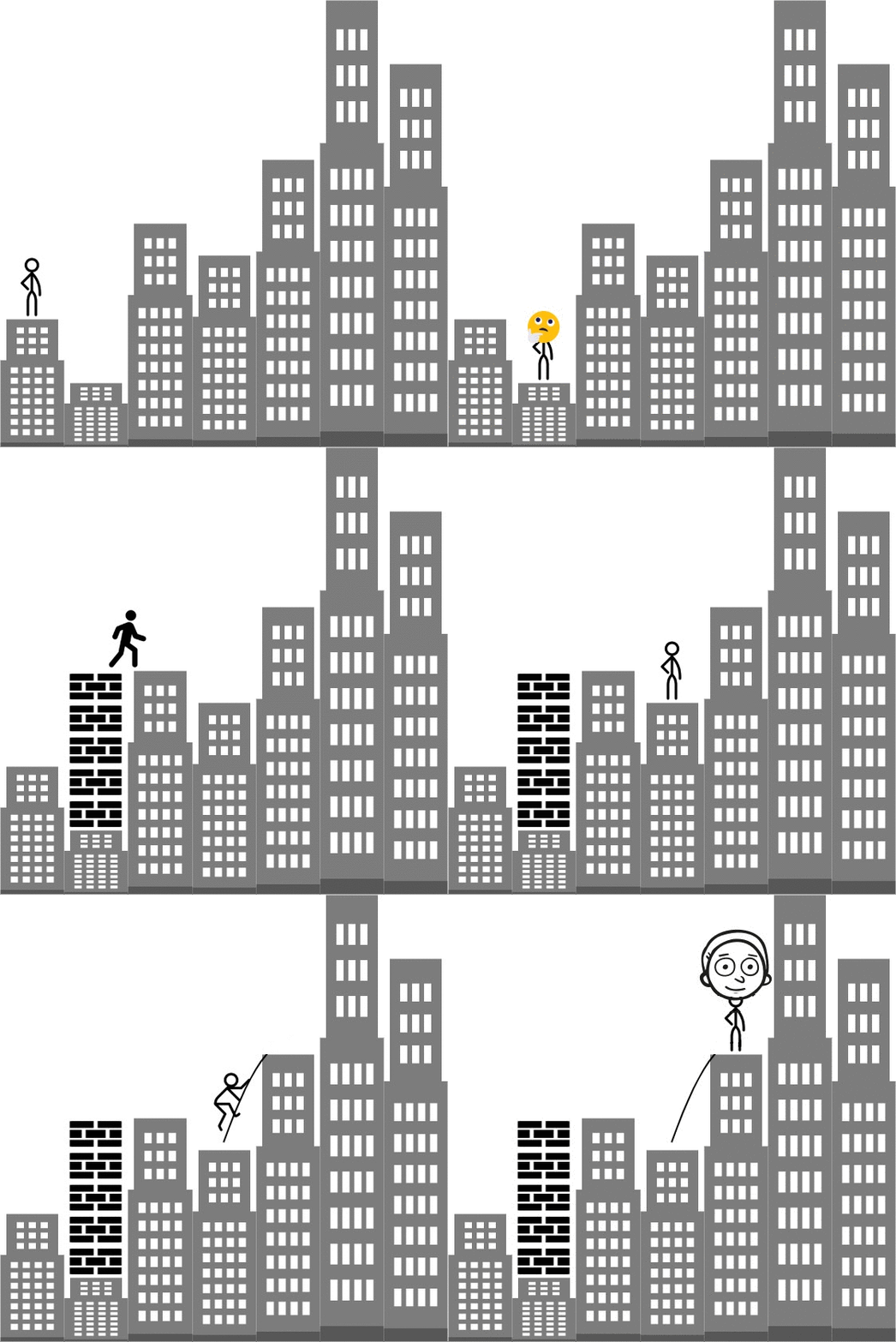
Input: heights = [4,2,7,6,9,14,12], bricks = 5, ladders = 1
Output: 4
Explanation: Starting at building 0, you can follow these steps:
- Go to building 1 without using ladders nor bricks since 4 >= 2.
- Go to building 2 using 5 bricks. You must use either bricks or ladders because 2 < 7.
- Go to building 3 without using ladders nor bricks since 7 >= 6.
- Go to building 4 using your only ladder. You must use either bricks or ladders because 6 < 9.
It is impossible to go beyond building 4 because you do not have any more bricks or ladders.
You are given an integer array heights representing the heights of buildings, some bricks, and some ladders.
You start your journey from building 0 and move to the next building by possibly using bricks or ladders.
While moving from building i to building i+1 (0-indexed),
Return the furthest building index (0-indexed) you can reach if you use the given ladders and bricks optimally.
Examples
Example 1
Input: heights = [4,2,7,6,9,14,12], bricks = 5, ladders = 1
Output: 4
Explanation: Starting at building 0, you can follow these steps:
- Go to building 1 without using ladders nor bricks since 4 >= 2.
- Go to building 2 using 5 bricks. You must use either bricks or ladders because 2 < 7.
- Go to building 3 without using ladders nor bricks since 7 >= 6.
- Go to building 4 using your only ladder. You must use either bricks or ladders because 6 < 9.
It is impossible to go beyond building 4 because you do not have any more bricks or ladders.