Longest Special Path - Practice Coding | SlaveCode
0
0123456789
0
0123456789
:
0
0123456789
0
0123456789
3425. Longest Special Path
Hard
50 Points
Array
Hash Table
Tree
Depth-First Search
Prefix Sum
You are given an undirected tree rooted at node 0 with n nodes numbered from 0 to n - 1, represented by a 2D array edges of length n - 1, where edges[i] = [ui, vi, lengthi] indicates an edge between nodes ui and vi with length lengthi. You are also given an integer array nums, where nums[i] represents the value at node i.
A special path is defined as a downward path from an ancestor node to a descendant node such that all the values of the nodes in that path are unique.
Note that a path may start and end at the same node.
Return an array result of size 2, where result[0] is the length of the longest special path, and result[1] is the minimum number of nodes in all possible longest special paths.
Examples
Example 1
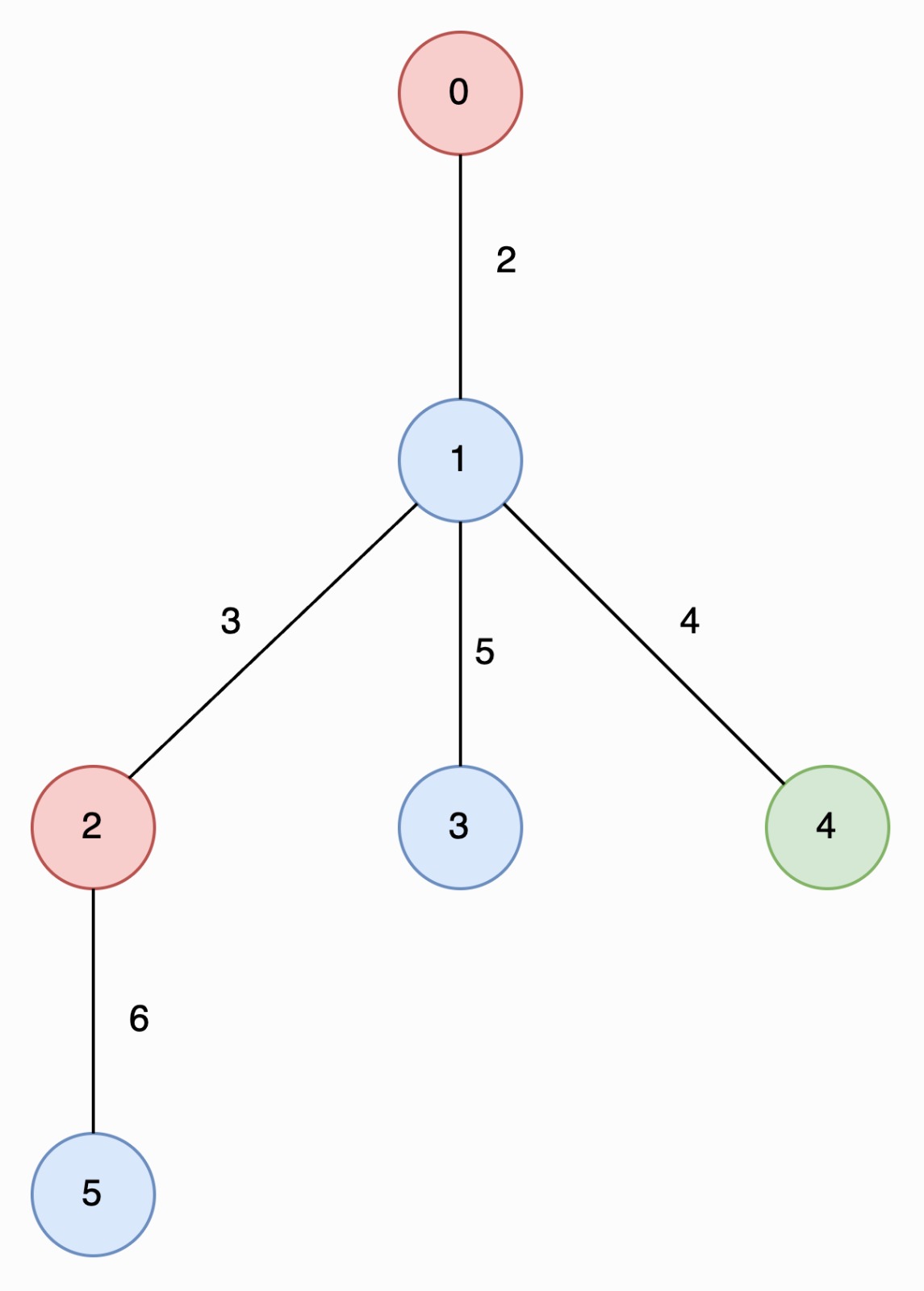
Input: edges = [[0,1,2],[1,2,3],[1,3,5],[1,4,4],[2,5,6]], nums = [2,1,2,1,3,1]
Output: [6,2]
Explanation:
The longest special paths are 2 -> 5 and 0 -> 1 -> 4 , both having a length of 6. The minimum number of nodes across all longest special paths is 2.
Example 2
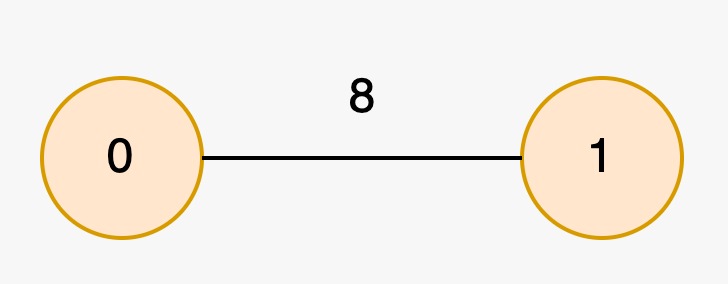
Input: edges = [[1,0,8]], nums = [2,2]
Output: [0,1]
Explanation:
The longest special paths are 0 and 1 , both having a length of 0. The minimum number of nodes across all longest special paths is 1.
Constraints
2 <= n <= 5 * 104
edges.length == n - 1
edges[i].length == 3
0 <= ui, vi < n
1 <= lengthi <= 103
nums.length == n
0 <= nums[i] <= 5 * 104
The input is generated such that edges represents a valid tree.
3425. Longest Special Path
Hard
50 Points
Array
Hash Table
Tree
Depth-First Search
Prefix Sum
You are given an undirected tree rooted at node 0 with n nodes numbered from 0 to n - 1, represented by a 2D array edges of length n - 1, where edges[i] = [ui, vi, lengthi] indicates an edge between nodes ui and vi with length lengthi. You are also given an integer array nums, where nums[i] represents the value at node i.
A special path is defined as a downward path from an ancestor node to a descendant node such that all the values of the nodes in that path are unique.
Note that a path may start and end at the same node.
Return an array result of size 2, where result[0] is the length of the longest special path, and result[1] is the minimum number of nodes in all possible longest special paths.
Examples
Example 1
Input: edges = [[0,1,2],[1,2,3],[1,3,5],[1,4,4],[2,5,6]], nums = [2,1,2,1,3,1]
Output: [6,2]
Explanation:
The longest special paths are 2 -> 5 and 0 -> 1 -> 4 , both having a length of 6. The minimum number of nodes across all longest special paths is 2.
Example 2
Input: edges = [[1,0,8]], nums = [2,2]
Output: [0,1]
Explanation:
The longest special paths are 0 and 1 , both having a length of 0. The minimum number of nodes across all longest special paths is 1.
Constraints
2 <= n <= 5 * 104
edges.length == n - 1
edges[i].length == 3
0 <= ui, vi < n
1 <= lengthi <= 103
nums.length == n
0 <= nums[i] <= 5 * 104
The input is generated such that edges represents a valid tree.