Table: Tree
Each node in the tree can be one of three types:
Write a solution to report the type of each node in the tree.
Return the result table in any order.
The result format is in the following example.
Examples
Example 1
+-------------+------+
| Column Name | Type |
+-------------+------+
| id | int |
| p_id | int |
+-------------+------+
id is the column with unique values for this table.
Each row of this table contains information about the id of a node and the id of its parent node in a tree.
The given structure is always a valid tree.
Example 2
Input:
Tree table:
+----+------+
| id | p_id |
+----+------+
| 1 | null |
| 2 | 1 |
| 3 | 1 |
| 4 | 2 |
| 5 | 2 |
+----+------+
Output:
+----+-------+
| id | type |
+----+-------+
| 1 | Root |
| 2 | Inner |
| 3 | Leaf |
| 4 | Leaf |
| 5 | Leaf |
+----+-------+
Explanation:
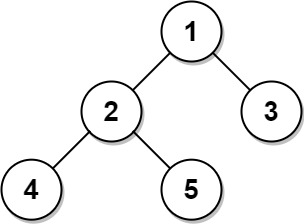
Node 1 is the root node because its parent node is null and it has child nodes 2 and 3.
Node 2 is an inner node because it has parent node 1 and child node 4 and 5.
Nodes 3, 4, and 5 are leaf nodes because they have parent nodes and they do not have child nodes.
Example 3
Input:
Tree table:
+----+------+
| id | p_id |
+----+------+
| 1 | null |
+----+------+
Output:
+----+-------+
| id | type |
+----+-------+
| 1 | Root |
+----+-------+
Explanation: If there is only one node on the tree, you only need to output its root attributes.
608. Tree Node
Medium
30 Points
Database
Table: Tree
Each node in the tree can be one of three types:
Write a solution to report the type of each node in the tree.
Return the result table in any order.
The result format is in the following example.
Examples
Example 1
+-------------+------+
| Column Name | Type |
+-------------+------+
| id | int |
| p_id | int |
+-------------+------+
id is the column with unique values for this table.
Each row of this table contains information about the id of a node and the id of its parent node in a tree.
The given structure is always a valid tree.
Example 2
Input:
Tree table:
+----+------+
| id | p_id |
+----+------+
| 1 | null |
| 2 | 1 |
| 3 | 1 |
| 4 | 2 |
| 5 | 2 |
+----+------+
Output:
+----+-------+
| id | type |
+----+-------+
| 1 | Root |
| 2 | Inner |
| 3 | Leaf |
| 4 | Leaf |
| 5 | Leaf |
+----+-------+
Explanation:
Node 1 is the root node because its parent node is null and it has child nodes 2 and 3.
Node 2 is an inner node because it has parent node 1 and child node 4 and 5.
Nodes 3, 4, and 5 are leaf nodes because they have parent nodes and they do not have child nodes.
Example 3
Input:
Tree table:
+----+------+
| id | p_id |
+----+------+
| 1 | null |
+----+------+
Output:
+----+-------+
| id | type |
+----+-------+
| 1 | Root |
+----+-------+
Explanation: If there is only one node on the tree, you only need to output its root attributes.